
Tub Enclosures · Bathtub Glass Doors · Bend, Oregon
Glass Tub Enclosures and Bathtub Glass Doors in Bend, Oregon
Custom bathtub glass doors, sliding and hinged, measured on site and installed by a licensed local crew.
- Licensed, Bonded & Insured · CCB 236893
- Free In-Home Estimates
- Custom Sizing, Many Styles
- Locally Owned in Central Oregon
Bathtub glass doors made to fit your tub
A tub and shower combination is the most common bathroom setup in Central Oregon homes, and it is also the one most often left with a shower curtain that was only ever meant to be temporary. Glass Daddy Bend installs glass tub enclosures and bathtub glass doors that replace the curtain with clear, durable glass, so the bathroom looks larger, brighter, and easier to keep clean.
A glass tub enclosure is simply glass built around your bathtub so water stays in the tub while you shower. It can be a pair of sliding doors, a single hinged door with a fixed panel, or a fixed screen that leaves a wide opening at one end. Each style has strengths, and the right one depends on the size of your bathroom, the width of your tub, and how you like to use the space.
We are a locally owned, licensed, bonded, and insured glass contractor based in Bend, and every bathtub glass door project starts the same way. We visit your home, measure the opening carefully, walk you through your options, and handle the installation ourselves. Call 541-325-4235 or request a free in-home estimate to get started.
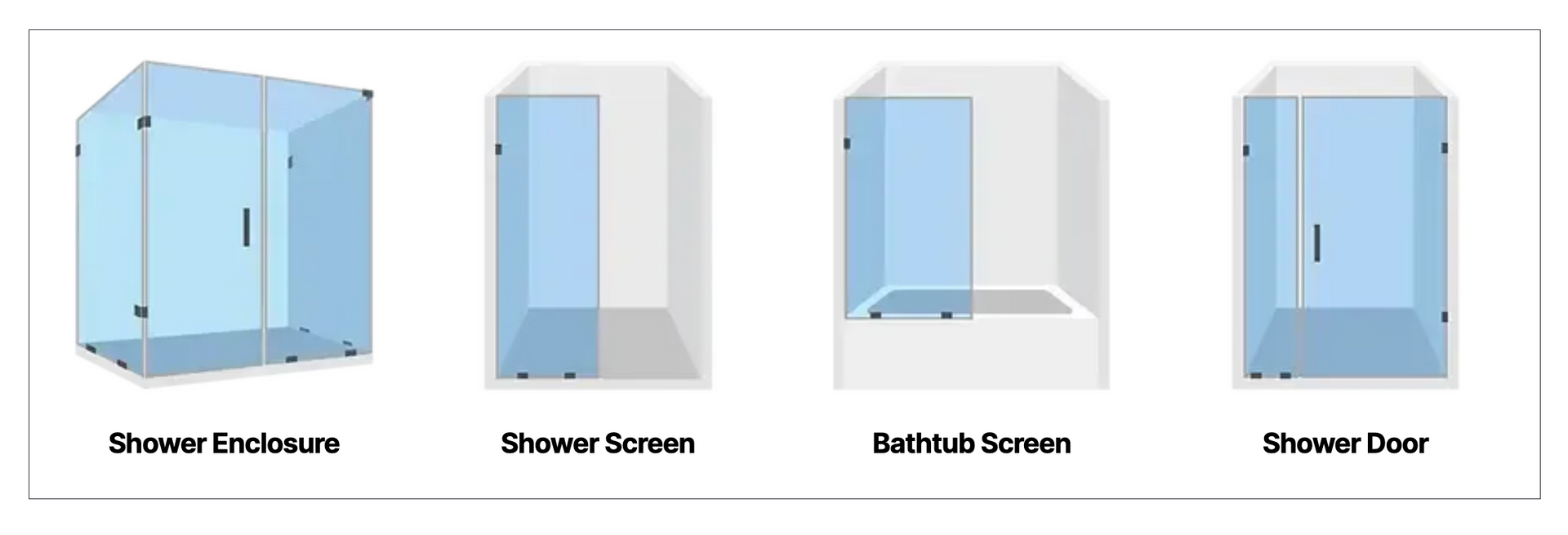
Types of bathtub glass doors
Most glass tub enclosures follow one of four layouts. Here is how each one works and where it fits best.
Sliding bathtub glass doors
Two glass panels travel on an upper and a lower track, with one panel passing in front of the other. Because nothing swings into the room, sliding doors suit smaller bathrooms and rooms where a vanity or toilet sits close to the tub. You can open about half the width of the tub at a time, and the lower track needs an occasional cleaning. Sliding doors come framed or frameless and are the most common choice for a standard alcove tub.
Hinged and pivot doors
A hinged or pivot door swings open on hinges mounted to a wall or to a fixed glass panel. It opens wider than a sliding door and gives you a full, clear entry, which helps when you are bathing a child, cleaning the tub, or stepping over a tall tub wall. It needs room to swing, so it works best when there is space beside the tub, and it is usually paired with a fixed panel because a tub is too long for a single door.
Fixed bathtub screens
A fixed screen, sometimes called a bath screen, is a single glass panel at the shower end of the tub. It blocks spray from the showerhead while leaving the rest of the tub open, which suits households that mostly shower. With no moving parts and no track, it has very few places for soap scum to collect, so it is the easiest style to keep clean. We check the showerhead position with you at measuring so water stays where it should.
Custom tub enclosures
Some bathrooms call for something beyond a standard layout: a soaking tub with a glass return panel, a tub set into a corner, or a tub with a half wall. We design custom bathtub enclosures for these situations from measurements taken in your home, so the glass fits your actual walls instead of a catalog size.
Frameless, semi-frameless, and framed tub enclosures
The word frameless describes how the glass is held, not how it looks from across the room. A frameless bathtub glass door uses thick tempered glass with minimal hardware such as hinges, clips, and a handle. There is no metal frame around the panels, so you see more glass and less metal, which is why frameless doors make a bathroom feel larger. They cost more than framed options, and they are the style most people picture when they search for a bathtub glass door frameless. You can see the full look on our frameless shower doors page.
A framed bathtub glass door uses a metal frame around every edge of the glass. The frame supports thinner glass, adds structure, and keeps the price lower. Framed tub doors are practical and sturdy, and they come in finishes that match your fixtures. A semi-frameless door sits in between, with a frame on part of the door or on the track and exposed glass edges elsewhere. We cover the differences in detail on our framed showers page.
If you are not sure which style you want, bring your budget and your priorities to the estimate. We would rather help you choose well than sell you more glass than you need.
Why replace a shower curtain with a glass tub enclosure
A shower curtain does the basic job, but it also traps moisture, collects mildew, and drifts inward against your legs. Glass keeps water inside the tub, lets light travel across the room, and never needs to be washed in the laundry or replaced. For homeowners getting ready to sell, a glass enclosure is one of the most visible bathroom upgrades because it shows up in listing photos and makes a small bathroom look larger.
- Water stays in the tub instead of on the floor
- Light moves through the room, so small bathrooms feel bigger
- No curtain liner to wash, replace, or mildew
- A cleaner look for photos, showings, and everyday use
- Custom sizing for remodels and new construction
Glass used in tub and shower enclosures is tempered safety glass. It is built to resist breaking, and if it ever does break it crumbles into small pieces instead of sharp shards. That is one reason glass is a sound choice for a wet, slippery space.
Glass and hardware choices
You can choose clear, frosted, or textured glass depending on how much privacy you want. Clear glass keeps the bathroom open and shows off tile. Frosted and textured glass obscure the view while still passing light, which is useful in bathrooms that are visible from a hallway or a bedroom. Many homeowners pick clear glass for a hall bath that is rarely seen and frosted glass for a bath that opens off a bedroom.
Hardware finishes such as brushed nickel and matte black are available so your door handles and hinges coordinate with the faucet, showerhead, and towel bars you already have. Handle style, hinge placement, and the direction the door opens are details we settle with you at the estimate, so there are no surprises on installation day.
Measuring and fitting a bathtub glass door
A tub enclosure only works if it fits the room you actually have. This is what we look at in your home.
Walls and tile
Walls lean slightly out of plumb, tile surrounds add or subtract fractions of an inch, and a tub rim can be wider on one side. A door that is off by even a quarter inch can bind or leak, so we measure at several heights and positions.
Tub type
A standard alcove tub set between three walls is the easiest fit for a sliding door or a hinged door with a fixed panel. A drop-in tub with a tiled deck needs careful placement so water drains back into the tub. Freestanding and corner tubs may call for a custom layout.
Room layout
We check where the door will swing, where the showerhead points, and how close the vanity, toilet, or window sits. These details decide whether a sliding door, a hinged door, or a fixed screen is the better match for your bathroom.
What affects the cost of a tub enclosure
Many customers search for bathtub glass door installation cost before they call, and the honest answer is that the price depends on a handful of choices. We give exact numbers in a free estimate instead of a range that may not apply to your bathroom. These are the main factors:
- Door style: sliding, hinged, or fixed screen
- Frame style: framed, semi-frameless, or frameless
- Glass thickness and glass type
- Hardware finish and handle style
- Overall size and any custom layout or extra panels
As a general rule, framed doors are the most affordable, semi-frameless doors sit in the middle, and frameless doors cost the most because of the thicker glass and precision hardware. A free in-home estimate puts real numbers on each option for your tub so you can compare them side by side.
How a tub enclosure installation works
We keep the process simple and communicate at every step.
Send a request
Call 541-325-4235 or use our contact page and tell us about your tub, your bathroom, and the look you want.
On-site measuring
We visit your home, measure the opening, and talk through door styles, glass, and hardware.
Deposit and scheduling
When you are ready to move forward, a deposit secures your project and gets it on the schedule.
Installation
Our crew installs the glass, checks the fit and the seals, and cleans up when the work is done.
Final walkthrough
Before we leave, we review every detail with you to make sure you are happy with the finished result.
Throughout the project you work with the same local team. If something unexpected comes up in the walls or the tile, we tell you right away and work out the best fix with you.
Caring for a glass tub enclosure
A glass tub enclosure stays looking new with very little effort. After showers, a quick pass with a squeegee or towel prevents water spots, and a monthly cleaning with a non-abrasive glass cleaner keeps the surface clear. Avoid abrasive pads and harsh chemicals on glass, and wipe metal hardware gently to protect its finish.
If you have sliding doors, clear the bottom track regularly so the wheels glide smoothly and water drains the way it should. Mineral deposits from tap water leave spots as they dry, so drying the glass is the single best habit. If a door starts to drag, rattle, or leak, call us before the problem grows.
Bathtub glass door ideas for common bathrooms
Three situations we see often, and the layouts that tend to work well.
Small guest or hall bath
A sliding door or a fixed screen keeps the footprint tight and avoids a door swing. Clear glass makes a narrow room feel wider.
Remodeled primary bath
A frameless hinged door with a fixed panel gives a clean, open look that shows off new tile and fixtures. Matte black or brushed nickel hardware can tie the room together.
Busy family bath
A hinged door opens wide for bathing kids and cleaning the tub, while a framed sliding door keeps the budget in check. Frosted glass adds privacy when the door is visible from a hallway.
Why homeowners choose Glass Daddy Bend
Choosing a contractor for glass in your bathroom comes down to trust. We are a locally owned company that is licensed, bonded, and insured in Oregon under CCB 236893, and we keep communication simple from the first call to the final walkthrough.
You will not get pressure or confusing pricing from us. You will get straight answers, a clear estimate, and a crew that shows up when scheduled and leaves your bathroom clean.
What you can count on
- Free in-home estimates for your tub or shower
- Custom measuring, not catalog guesses
- Clear, frosted, or textured glass and matching hardware
- A local team you can call after the job is done
Serving Bend and Central Oregon
We install bathtub glass doors and tub enclosures for homeowners in Bend and across the region. Explore our related pages:
Tub enclosure and bathtub glass door questions
What is the difference between a tub enclosure and a shower enclosure?
A tub enclosure is glass built around a bathtub, usually a tub and shower combination, so water stays in the tub. A shower enclosure surrounds a stand-alone shower with no tub. The glass, hardware, and measuring are different for each, so we plan them separately.
Do you install sliding bathtub glass doors?
Yes. Sliding doors are one of the most popular choices for a standard alcove tub because they do not swing into the room. They come framed or frameless, and we help you pick the style that fits your bathroom and budget.
Can I get a frameless glass door on a bathtub?
Yes. A frameless bathtub glass door uses thick tempered glass with minimal hardware for a clean, open look. Frameless doors cost more than framed ones, and we can show you how the options compare during your estimate.
How much does a bathtub glass door cost?
The price depends on the door style, frame style, glass, hardware, and the size of your tub. Framed doors usually cost the least and frameless doors the most. Call for a free in-home estimate and we will give you exact numbers for your bathroom.
Will a glass door fit my tub?
Almost always, because we measure your actual opening in your home. We account for out-of-plumb walls, tile thickness, and tub rim width so the glass fits properly. Unusual tubs may need a custom layout, which we can design for you.
Can I choose frosted glass for privacy?
Yes. You can choose clear, frosted, or textured glass. Frosted and textured glass obscure the view while still letting light through, which works well when the bathroom is visible from a hallway or bedroom.
Are glass tub enclosures hard to clean?
No. Wiping the glass after a shower and cleaning with a non-abrasive glass cleaner keeps it clear. Fixed screens are the easiest to maintain, and sliding doors only need their bottom track cleared now and then.
Do glass tub doors leak?
A properly measured and installed enclosure keeps water in the tub. Leaks usually come from poor fit, worn seals, or a door that is out of adjustment. If you have a leak, call us and we will take a look.
Do you replace an old tub door?
We install new glass tub enclosures and bathtub glass doors. If you already have an old door you want to replace, tell us about it when you call and we will explain what to expect at the estimate.
How do I get started?
Call 541-325-4235 or send a request through our contact page. We offer free in-home estimates, so you can see the options, ask questions, and compare prices with no pressure.
Ready for a glass tub enclosure?
Call us or send a request. Estimates are free and done in your home.
Request a Free Estimate